Orc Incremental Griffon
A source-bounded Griffon enemy page for recording current movement, targeting, actions, and counters without deriving behavior or statistics from its name.
- Published
- Updated
- Last checked
Not verified yet
Quick facts
- Entity
- New version 1.0 enemy unit
- Verified detail
- Name only
- Mechanics
- Not published
- Image status
- No exact registered image
A name is not a movement rule
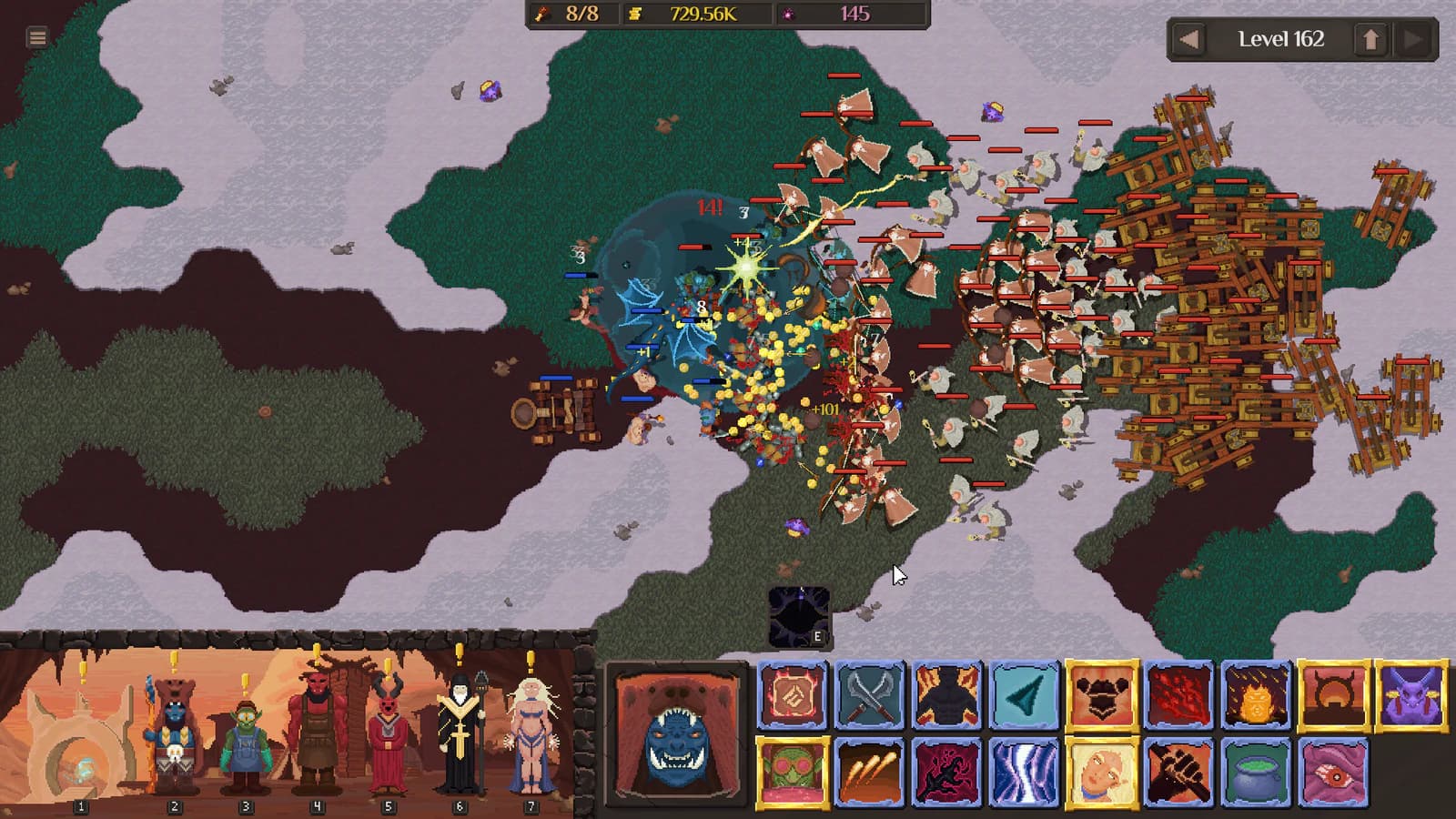
Nothing in the checked announcement establishes flight, speed, range, target priority, damage, or encounter placement. The snowfield hero is generic promotional combat art and does not identify a Griffon.
Use the enemy ledger for the verified name boundary. Use formations only to organize a controlled response after the current encounter exposes a specific problem.
Prove identity before behavior
Capture an exact visible label or direct official identity match. Without one, keep the subject recorded as an unidentified enemy even if its silhouette fits the name.
| Field | Current-build record |
|---|---|
| Build | Exact version or date |
| Identity source | Label, tooltip, or official asset |
| Encounter | Level, wave, and modifiers |
| Start location | Relative battlefield position |
| Movement | Visible path or position change |
| Action | Animation and order |
| Target | Observable selected subject |
| Outcome | First visible result |
Avoid turning an animation into an exact speed or range. Record the sequence and repeat it.
Isolate targeting observations
Hold the army and encounter fixed across attempts. Change one ally position and see whether the same target is selected. If another enemy or modifier changes, mark the comparison uncontrolled.
One target selection does not establish priority. Several outcomes under clearly varied positions can support a narrow pattern, but hidden rules remain unpublished unless the interface names them.
Test responses against a named failure
Record whether the problem is early ally loss, delayed damage, disrupted order, or another visible event. Choose one reversible response and define a stop condition. Report the same checkpoint before and after.
Do not recommend a unit or formation universally. A response can be useful under one build and objective while failing elsewhere.
Maintain an evidence boundary
New facts should carry an exact build and source. Preserve earlier unknowns so readers can see when the page gained evidence. Never import abilities from folklore, another title, or an unlabeled screenshot.
If official media eventually supplies an identity, verify that it names this enemy directly before updating the hero relationship. Until then, this page remains an observation template built around one confirmed label.
Record apparent movement carefully
Use battlefield landmarks or relative positions rather than invented distance units. Note whether the camera, formation, or target moved at the same time. A recording can preserve order and approximate duration, but it cannot reveal a hidden movement stat.
Compare several attempts from the same starting arrangement. If paths differ, retain each sequence and list the conditions that changed. A movement pattern becomes useful evidence only when another reader can reproduce the setup and recognize the same visible transition.
Official sourceVerification boundary
- Build boundary
- version 1.0 announcement
- Evidence check
- Still unknown
- role, stats, abilities, encounter, counter, exact image identity
Frequently asked questions
- What is verified about Griffon?
- The version 1.0 announcement confirms Griffon as a new enemy unit by name. Boundary: version 1.0 announcement. Checked 2026-08-28. The checked source does not publish its role, stats, abilities, encounter, unlock timing, counter, or exact image identity.
- Can the Griffon name establish movement or targeting?
- No. The announcement supplies a name, not behavior. A build-labeled encounter record must establish any movement, target, ability, or counter claim.
Source ledger
- We have a release date!
steam-announcement ·