Orc Incremental Units
A verified roster boundary for the four allied units announced for version 1.0, with official roles, unranked status, evidence limits, and formation questions.
- Published
- Updated
- Last checked
Quick facts
- Assassin
- stealth unit specializing in critical damage · UNRANKED · 1.0 CONFIRMED
- Troll
- durable tank that reflects damage · UNRANKED · 1.0 CONFIRMED
- Warg Raider
- area-damage fighter with a hook to pull vulnerable enemies out of safety · UNRANKED · 1.0 CONFIRMED
- Juggernaut
- explosive siege assault unit · UNRANKED · 1.0 CONFIRMED
- Evidence check
- 2026-08-28
- Ranking boundary
- Comparable released-build results are not published.
Confirmed version 1.0 roster boundary
The official release announcement names exactly four new allied units: Assassin, Troll, Warg Raider, and Juggernaut. This page treats those four names as the confirmed version 1.0 roster boundary for Task 13. It does not silently promote every character shown in older press material into that list.
The announcement also provides one role sentence for each unit. The registry panel below is rendered from structured data and is the only copy of those exact factual strings on this route. That prevents an article edit from changing an official role, build label, or evaluation state accidentally.
The Assassin reference, Troll reference, Warg Raider reference, and Juggernaut reference continue with source-bounded questions for later observation. Their prose does not restate the registry record.
Why older promotional characters are not roster proof
The official press kit contains portraits and sprites for characters associated with Orc Incremental. Some are useful visual records, but a media filename does not prove that the character belongs to the announced version 1.0 allied roster. A historical promotional asset can document its own subject and source without defining current playable scope.
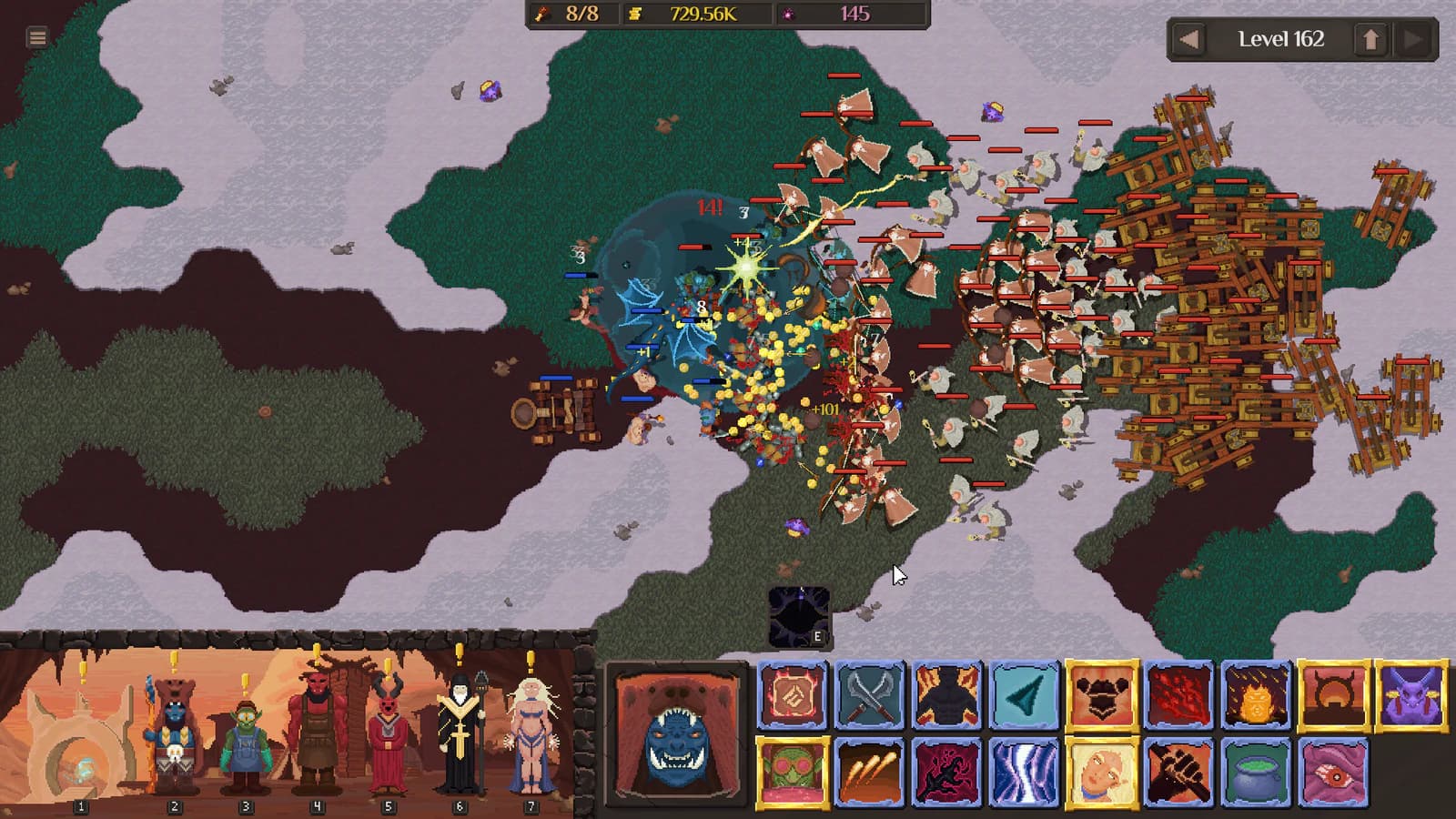
This is why the four entity pages use generic key art or the official logo. None uses a legacy character image as a substitute portrait. The snowy battle hero on this hub establishes the game's army theme, not the identity of every figure in the frame.
If an official source later names another allied unit for the same build, the roster can be updated with that source. Until then, the boundary stays at the four named records.
Read each role as a testable question
An official role is useful, but it is not a completed build guide. Translate each sentence into observations that can be repeated after release.
Assassin questions
Look for visible evidence of stealth and critical damage. Record when the state changes, which target is chosen, and what the interface labels as a critical event. Do not infer a chance or multiplier from the role name.
Troll questions
Separate survival from reflection. Record the incoming event, the visible response, the target affected, and whether the same sequence repeats. Do not estimate a formula from health bars.
Warg Raider questions
Capture the target before the hook, the movement caused by it, and the enemies affected by the area attack. Keep alternate explanations open when selection changes across attempts.
Juggernaut questions
Identify what the released game treats as a siege interaction and what the explosive cue affects. The words do not establish placement, reach, or priority.
Formation is part of the comparison
The Steam description verifies that players arrange an army before automated combat. Position can therefore be part of a unit test, but the checked sources do not publish complete board geometry or a targeting formula.
Use the formation diagnosis method: hold the build, encounter, army, and purchases fixed; move one unit; replay; then record the first visible change. If the result differs once, repeat it. If it does not repeat, keep the case open.
A formation result should name its scope. "Troll lasted longer in this encounter after this move" is a bounded observation. "Troll always belongs in front" is a general rule that needs broader evidence.
Why the roster is unranked
A placement needs comparable evidence. The official announcement confirms different jobs, not performance under the same conditions. It supplies no released-build test set across encounters, progression states, or formation choices.
The tier-list evidence gate therefore displays all four units as unranked with their version 1.0 identity confirmed. Unranked does not mean weak, equal, or unfinished. It means the identity evidence and the comparison evidence are at different stages.
For a future placement, record at least:
- the exact released build;
- the encounter and progression state;
- the full army and arrangement;
- the one variable changed;
- repeated outcomes measured the same way;
- the scope of the proposed conclusion.
Without those fields, a ranking is mostly a memory of dissimilar runs.
Build a field record after release
Use one row per controlled comparison:
| Field | Entry |
|---|---|
| Build | Exact version shown by the game |
| Encounter | Named or reproducibly described battle |
| Army | Every allied unit used |
| Arrangement | Position record or screenshot with context |
| Change | One unit, position, or progression choice |
| Result | Same visible measure for baseline and test |
| Repetitions | Number of comparable attempts |
| Open question | Plausible explanation not yet separated |
The build worksheet extends this record to progression and reset context. The best-formations guide focuses on arranging a fair comparison.
Unknowns that remain unknown
The checked sources do not publish exact unit values, attack timing, unlock conditions, draft availability, targeting priority, or a complete rarity table for version 1.0. They also do not identify every figure in the promotional battle images.
Do not fill these gaps with old Demo memories, assumptions from a genre, or values read from an unlabeled clip. If a current observation answers one question, attach the build and conditions. If the official game later publishes a rule, cite it directly.
Choosing the next page
Open an entity page when you need the exact official role and its test checklist. Open cards and drafting when the uncertainty begins with an offered unit or Totem. Open formation diagnosis when the army is known but the arrangement fails. Open build comparisons when several army and progression choices changed together.
The aim is not to make every page sound certain. It is to keep confirmed identity, current observation, and unanswered mechanic in separate fields so players can see what the evidence actually supports.
Official sourceConfirmed roster
| Unit | Official role | Evaluation | Checked |
|---|---|---|---|
| Assassin | stealth unit specializing in critical damage | UNRANKED · 1.0 CONFIRMED | |
| Troll | durable tank that reflects damage | UNRANKED · 1.0 CONFIRMED | |
| Warg Raider | area-damage fighter with a hook to pull vulnerable enemies out of safety | UNRANKED · 1.0 CONFIRMED | |
| Juggernaut | explosive siege assault unit | UNRANKED · 1.0 CONFIRMED |
Frequently asked questions
- Which official roles and statuses are recorded for the roster?
- Assassin: stealth unit specializing in critical damage (UNRANKED · 1.0 CONFIRMED); Troll: durable tank that reflects damage (UNRANKED · 1.0 CONFIRMED); Warg Raider: area-damage fighter with a hook to pull vulnerable enemies out of safety (UNRANKED · 1.0 CONFIRMED); Juggernaut: explosive siege assault unit (UNRANKED · 1.0 CONFIRMED). These records were checked 2026-08-28.
- How are older promotional characters treated?
- They stay outside this roster unless a current official source establishes that they belong to the named build. Historical artwork alone is not enough to promote an entity into the registry.
- Does an announced roster establish a ranking?
- No. An announcement can establish identities and role descriptions without supplying comparable performance results. A ranking needs observations from the same released build under recorded conditions.
Source ledger
- We have a release date!
steam-announcement ·
- Orc Incremental official Steam store data
steam-store ·