Orc Incremental Spells
A conservative spell guide for the official Fireball and Blizzard roles, with timing experiments based on battle symptoms and no invented values, unlocks, or ranking.
- Published
- Updated
- Last checked
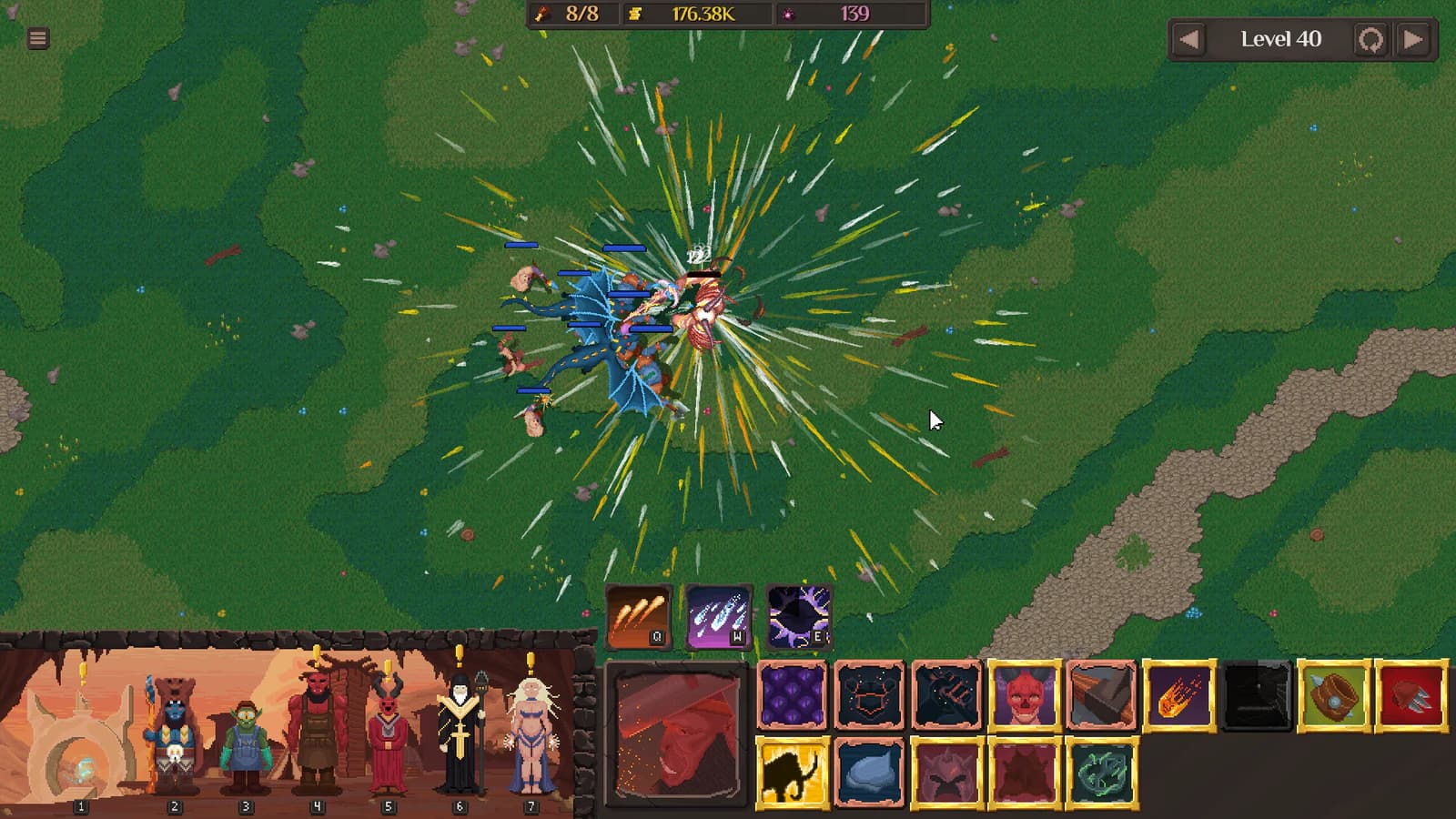
Quick facts
- Fireball
- Fireball is a timed spell used to finish a fight. Boundary: version 1.0.
- Blizzard
- Blizzard slows a boss that is pressuring the frontline. Boundary: version 1.0.
- Evidence check
- 2026-08-28
- Comparison boundary
- Broad official jobs only; no ranking.
Two roles, not a ranking
The registry records the two tactical jobs supported by current official store copy. Those jobs answer different battle symptoms. They do not provide comparable numbers, so this hub does not place one spell above the other.
The Fireball hero is an exact promotional image of that spell in battle. It proves that the pictured effect belongs to the official media set. It does not give damage, reach, timing rules, or final balance. Blizzard has no equally specific approved image in this source set, which is why its page uses a generic snowy battle frame and says so plainly.
Use the Fireball reference for a finishing-timing checklist. Use the Blizzard reference for a frontline-survival checklist. The correct starting page depends on how the battle is failing.
Start with the failure symptom
Watch one attempt before choosing a cast plan. Record the first decisive failure rather than the most dramatic animation.
| Failure symptom | First experiment | Outcome to record |
|---|---|---|
| Fight is nearly won, then reverses | Move the finishing cast earlier or later | Whether the same target falls before the reversal |
| Boss pressure breaks the frontline | Move the control cast around the pressure spike | First allied defeat and battle result |
| Important target is not reached | Hold cast timing fixed and inspect formation | Target access before and after one position change |
| Army collapses much earlier than expected | Verify build and army state before testing a spell | Whether the baseline repeats |
This table selects an experiment, not a preferred spell. If the failure is caused by target access, changing formation may answer more than changing cast timing. The formation diagnosis guide shows how to test one position without rewriting the whole army.
Build a timing experiment
A timing experiment needs a stable cue. Choose something visible and repeatable: a boss action, an allied defeat, a health-bar state, or another interface event. Avoid “when it feels right” because another player cannot reproduce that instruction.
Run a baseline with the same build, encounter, army, arrangement, and progression state. Then change only the cast moment. Record the cue, the cast, the immediate visible change, and the final result. Repeat both cases when possible.
| Field | Baseline | Changed timing |
|---|---|---|
| Build | Same exact label | Same exact label |
| Encounter | Same battle | Same battle |
| Army and arrangement | Fixed | Fixed |
| Progression state | Fixed | Fixed |
| Cast cue | Recorded | Recorded |
| First decisive event | Recorded | Recorded |
| Result | Recorded | Recorded |
If the baseline does not repeat, the case is not ready for a spell conclusion. Find the uncontrolled variable first.
Keep attribution narrow
A spell cast often happens near other changes. An allied attack lands, a boss changes state, or a unit falls at the same moment. Visual overlap does not prove which event caused the result.
Record the sequence frame by frame when attribution matters. If two explanations remain possible, design a case where one event is absent. A smaller encounter may be more useful than a late-run battle full of overlapping effects.
Avoid claiming that an animation boundary equals an effect boundary. The official media shows the visual event, while timing and targeting still need observation in a named build. The same caution applies to sound cues and screen shake.
The build worksheet helps when a progression purchase changed between attempts. The best-formations evidence gate is useful when the proposed conclusion includes both arrangement and spell timing.
Fireball historical references
Demo patch notes contain named Fireball contexts. Those references stay attached to their Demo version and Trial wording. A historical fix can establish that a specific interaction existed and was changed in that build. It does not publish present damage, healing behavior outside that exact context, cooldown, targeting, or a final upgrade path.
Do not combine a historical patch sentence with the current promotional image and present the result as one current mechanic. Keep the store role, image observation, and Demo note in separate fields.
Blizzard evidence boundary
The approved snapshot contains the broad store role but no separate numeric Blizzard source. That leaves many fields open. Do not estimate a slow rate from movement on a video. Do not infer duration from the snowy hero. Do not assume area, stacking, damage, unlock timing, or a cooldown from genre conventions.
A non-numeric survival comparison can still be useful. Record whether the first allied defeat moves relative to the chosen cue under matched conditions. Report that observation without converting it into an unmeasured rate.
Common attribution mistakes
The first mistake is choosing the result after seeing it. Define the cue and outcome before the comparison so the test does not move its goalposts.
The second is crediting the spell for a run that also changed units, positions, or purchases. Record those fields and repeat with one variable changed.
The third is turning broad official prose into a complete ability sheet. A role sentence is useful because it suggests a test. It is not permission to fill every missing field.
A practical spell log
Keep one row per attempt with the build, encounter, army, arrangement, progression state, cast cue, cast moment, immediate visible event, first allied defeat, final result, and unresolved alternative explanation. A short reproducible log is more valuable than a long recommendation that hides its conditions.
After a relevant patch, start a new group of rows. Do not edit the old observations into the new build. That preserves the evidence needed to see whether timing behavior changed.
Official sourceVerified spell roles
| Spell | Verified statement | Boundary | Checked |
|---|---|---|---|
| Fireball | Fireball is a timed spell used to finish a fight. | version 1.0 | |
| Blizzard | Blizzard slows a boss that is pressuring the frontline. | version 1.0 |
Frequently asked questions
- Which spell roles are confirmed?
- Fireball: Fireball is a timed spell used to finish a fight. Blizzard: Blizzard slows a boss that is pressuring the frontline. The role records were checked 2026-08-28.
- Does the official role copy establish spell values?
- No. A tactical use case does not publish damage, duration, area, cooldown, cost, unlock conditions, or a final upgrade path. Those fields stay open until an official source or a labeled build provides them.
- How should spell timing be compared?
- Repeat one encounter with the same army and progression state. Change only the cast moment, record the visible failure point and result, then repeat before drawing a narrow conclusion.
Source ledger
- Orc Incremental official Steam store page
steam-store ·